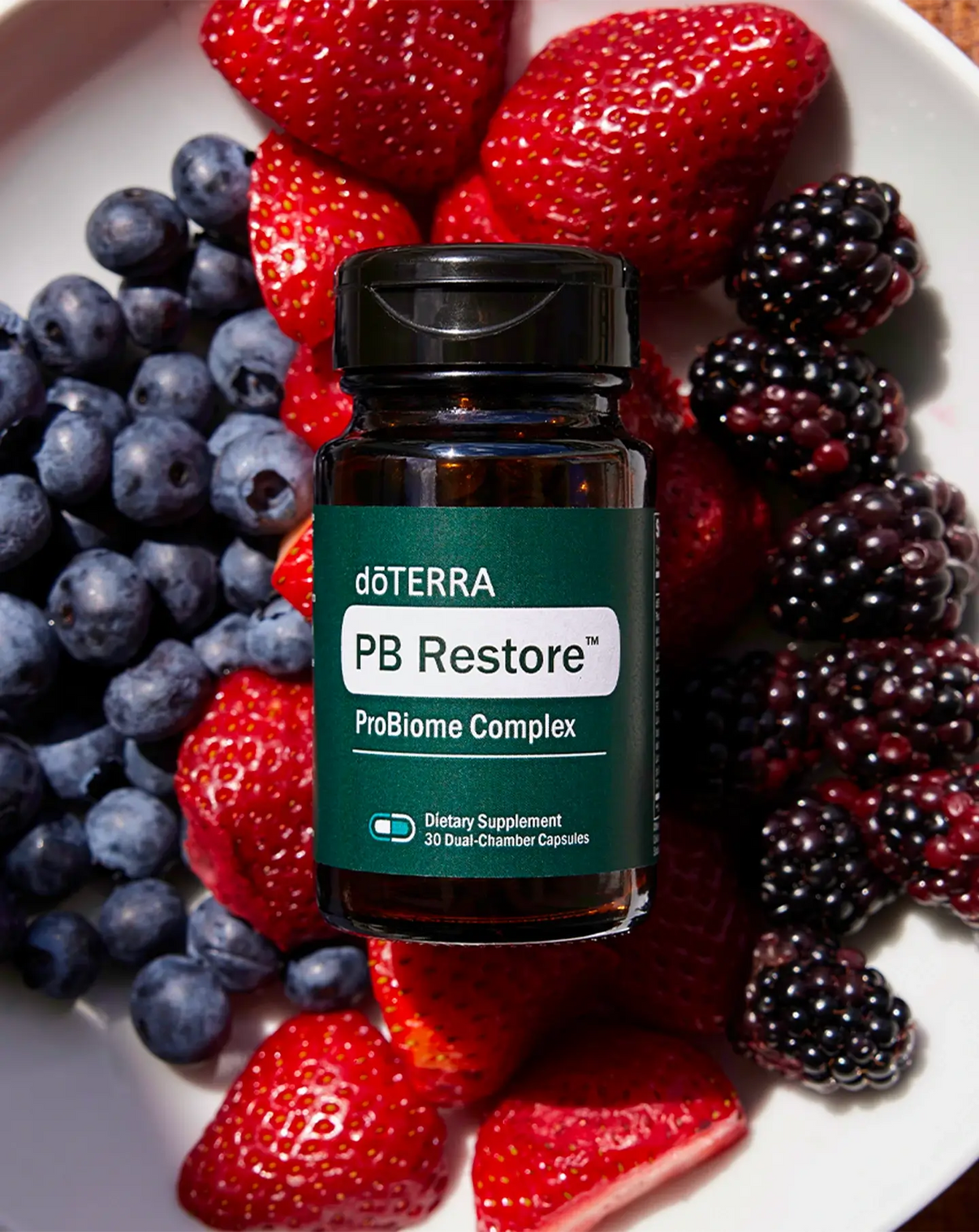
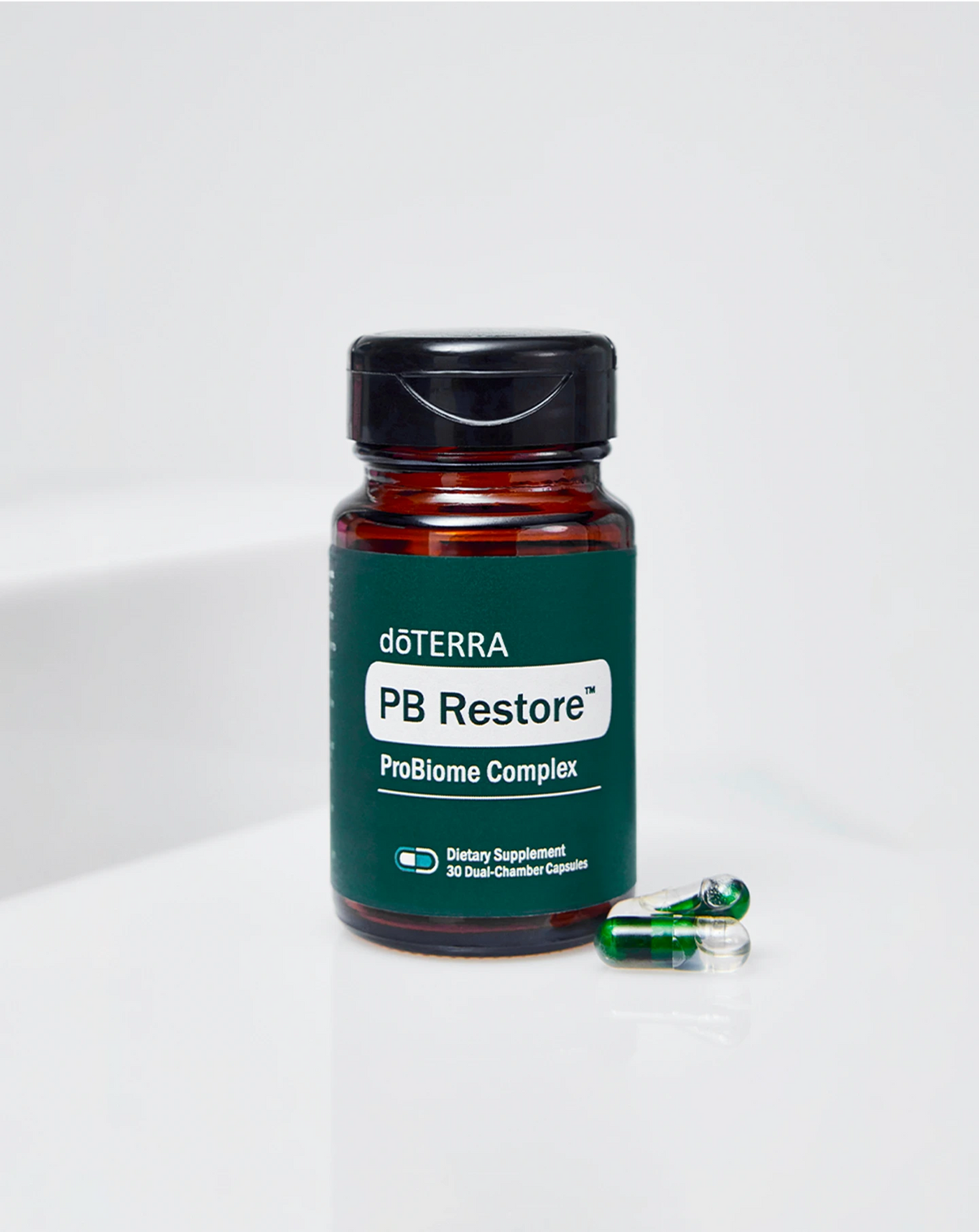
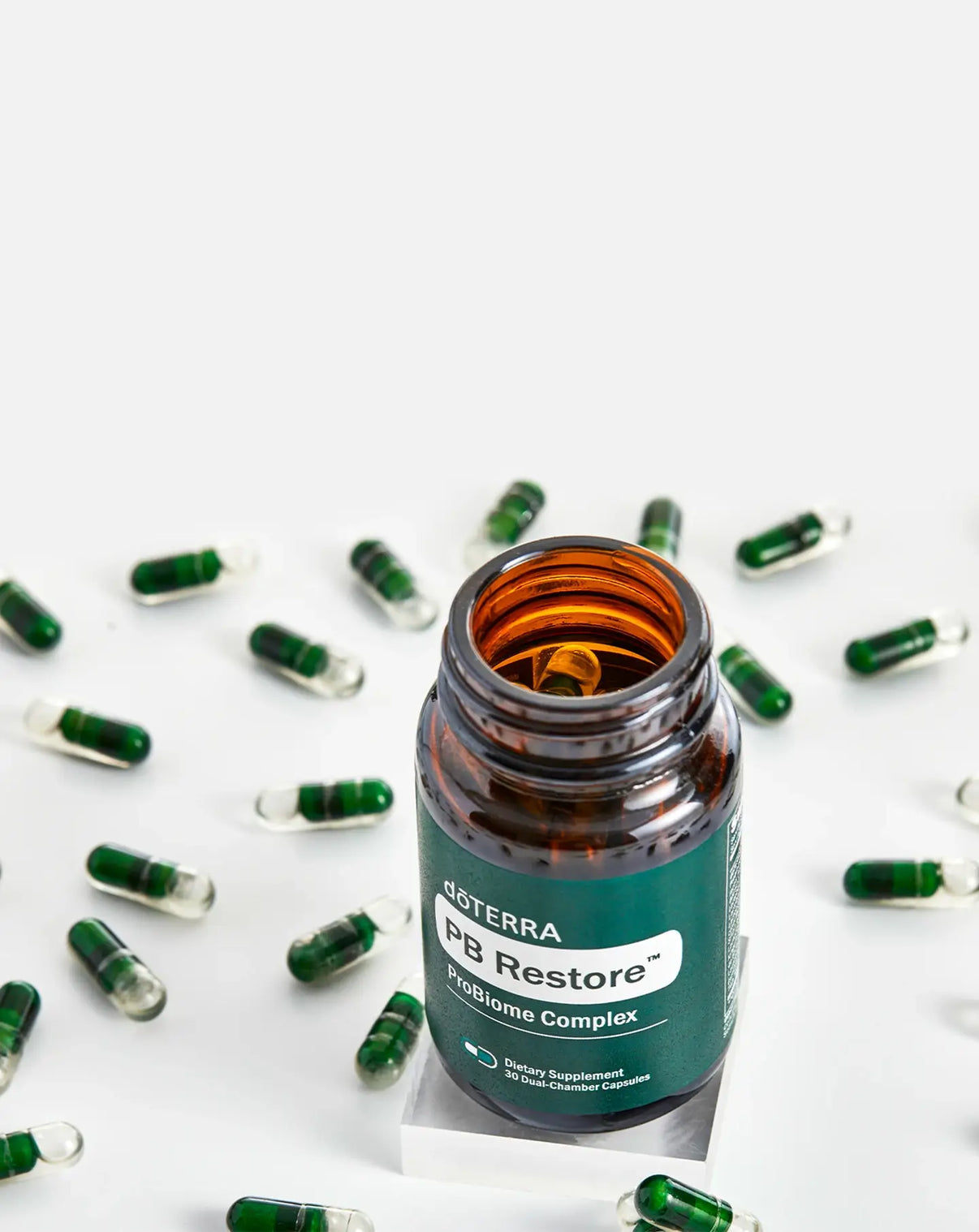
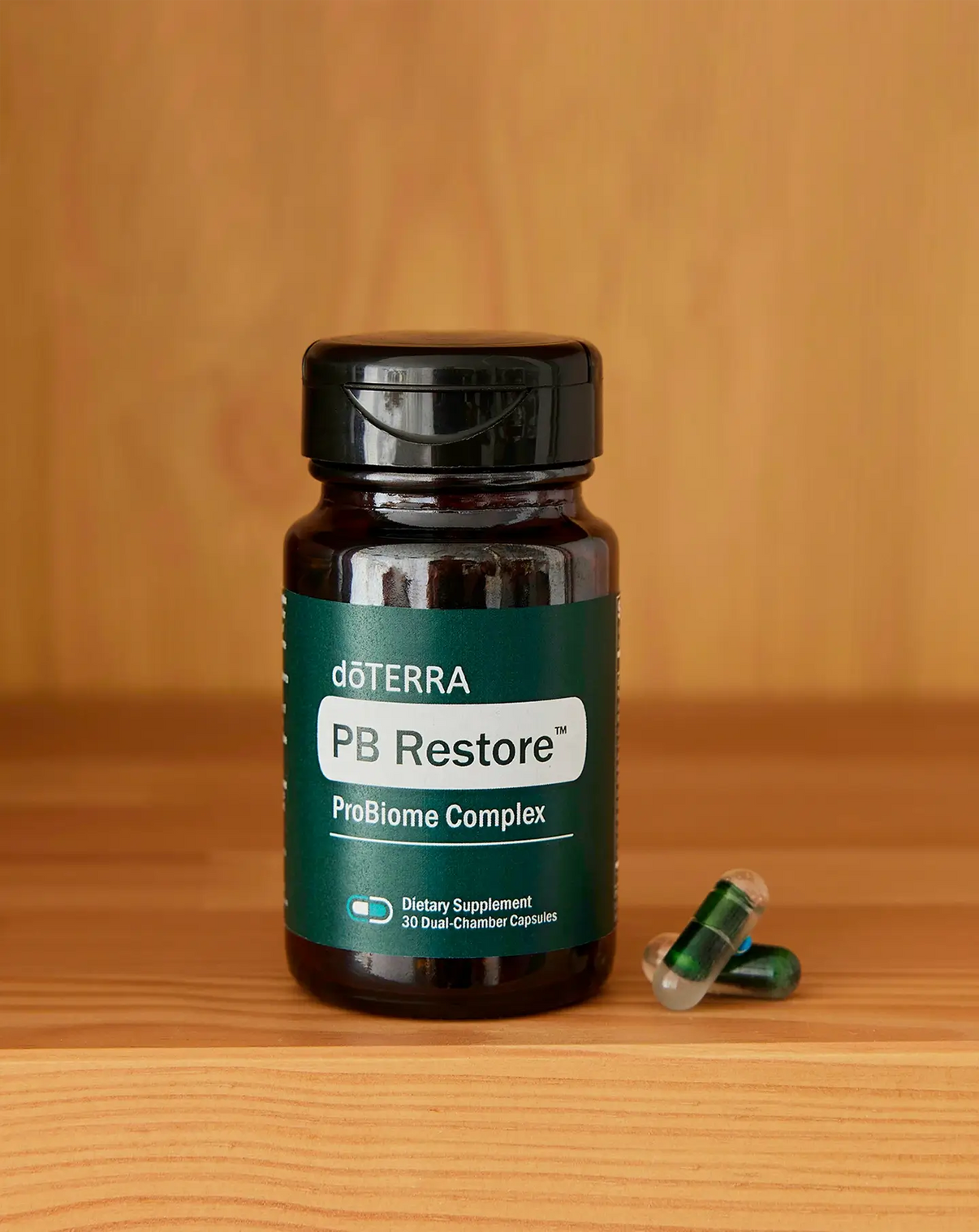
PB Restore food supplement dōTERRA | 30 capsules
Couldn't load pickup availability
Expédié sous 3 à 5 jours ouvrés. Plus de détails
PB Restore is a food supplement containing live bacterial cultures and fructo-oligosaccharides. Where PB Assist+ brings together thirteen strains in a powder, PB Restore brings together twenty-eight in a capsule.
One capsule provides thirty prebiotic, probiotic and postbiotic components, including eighteen billion live cells at the time of absorption, from twenty different species. The capsule has a dual wall: the outer wall carries the prebiotics and postbiotics, the inner wall the probiotic strains, and the whole passes through the acidic environment of the stomach before releasing. Fructo-oligosaccharides are natural carbohydrates that promote the selective development of beneficial bacteria.
One capsule a day, before a meal. Once opened, the bottle is kept in the refrigerator.
- Thirty prebiotic, probiotic and postbiotic components in a single capsule.
- Twenty-eight probiotic strains from twenty species, for a broad microbial diversity.
- Eighteen billion live cells at the time of absorption.
- A dual-wall capsule, which shields the cultures from the acidic environment of the stomach.
Application :
Usage tips: Take 1 capsule per day before a meal.
Uses
Uses
Swallow one capsule before a meal, with a glass of water.
Keep the bottle in the refrigerator once opened.
Ingredients
Ingredients
Stabiliser (glycerin), capsule (hydroxypropyl methylcellulose), fructo-oligosaccharides, bulking agent (microcrystalline cellulose), stabiliser (silicon dioxide), twenty-eight probiotic strains of the Lactobacillus and Bifidobacterium genera, glazing agent (magnesium stearate), colour (copper complexes of chlorophyllins).
Precautions
Precautions
Keep in the refrigerator once opened. Do not exceed the recommended daily dose.
Food supplements are not a substitute for a varied and balanced diet and a healthy lifestyle.
Ask your doctor for advice if you are pregnant, breastfeeding or taking any medication.
Keep out of reach of children, in a cool place.

At the heart of PB Restore dōTERRA
Strain 14D of Lactobacillus plantarum
This bacterium owes its name to its original habitat, the surface of plants, which is where it has always been isolated from fermented vegetables, sauerkraut and brined olives. The code 14D denotes one precise strain, lodged in a culture collection, not the species as a whole. Two strains of one species are not interchangeable.
Strain BLC1 of Bifidobacterium animalis ssp. lactis
Bifidobacteria take their name from their Y shape, visible under the microscope. The lactis subspecies was first isolated from fermented dairy products. It tolerates oxygen far better than its cousins, which makes it simpler to produce and to keep in capsule form.
Strain SP1 of Lactobacillus rhamnosus
Long regarded as a variety of Lactobacillus casei, this species was only recognised as distinct in 1989. It occurs naturally in aged cheeses. The code SP1 identifies a lodged strain, described and kept in a reference collection.
Strain IMC502 of Lactobacillus paracasei
Paracasei means literally close to casei, the species with which it was long confused. The prefix IMC refers to the collection of the University of Camerino, in Italy, where this strain is lodged. It is found naturally in hard cheeses.
Strain NTU-101 of Lactobacillus paracasei
The same species as the previous one, a different strain. NTU refers to National Taiwan University, where it was isolated from a fermented milk and then studied. It is a good illustration of what a strain code covers: an origin, a deposit, a genetic identity of its own.
Strain IMC501 of Lactobacillus rhamnosus
Lodged in the same Italian collection as IMC502, this strain is nearly always paired with it in formulas, the two having been selected together. Rhamnosus comes from rhamnose, a sugar it is able to consume, a trait used to identify it in the laboratory.
Full ingredient list
Do you have any questions?
We know using essential oils can seem a little overwhelming at first! Here are some pointers to help you get started.